Last week, I introduced the idea of the Longevity Inflation Index (LII), a new metric for understanding the real impact of rising costs on the savings and security of an ageing population. This week, let’s bring the concept to life with an example that highlights why the traditional Consumer Price Index (CPI) doesn’t tell the full story for older adults and why the LII offers a clearer picture of long-term financial well-being.
The American Healthy Ageing Paradox: The United States leads the world in healthcare innovation, with the National Institutes of Health (NIH) investing $48 billion in medical research in 2023—more than any other country. The U.S. devotes 17% of GDP to healthcare and spends $12,700 per capita—over double what Germany spends. With 35% of Americans now over age 50, the country should, in theory, be the global benchmark for healthy ageing.

Yet the data paints a starkly different picture:
-
The U.S. ranks 35th in health outcomes globally and last among G7 nations in life expectancy (77.2 years).
-
It has the highest obesity rate (42%) among peer countries, with 13% of Americans diagnosed with diabetes.
-
Cancer incidence: 350 cases per 100,000 people—significantly higher than in other developed nations.
Reason for the Paradox – why is the U.S. not ageing well despite its innovation and spending?
As Neal K. Shah whom I follow for valuable insights on the Longevity Economy, raised this important question in one of his earlier LinkedIn posts: “Is Soaring Healthcare Inflation the Wake-up Call We Need for A.I. Innovation?” In it, he highlights what he calls ‘Chart of the Century‘ by Mark Perry from the American Enterprise Institute. The chart reveals that healthcare costs (a key part of the Longevity Economy framework) have outpaced inflation across all other sectors over the last 20 years. Despite technological breakthroughs, healthcare remains stubbornly expensive, making innovation feel out of reach for many and emphasising the urgent need for disruptive change.
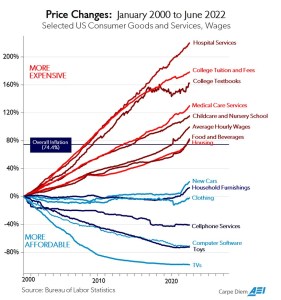
In just 24 years, U.S. healthcare costs have climbed over 200%, catapulting health insurance to the second-largest expense after payroll for many employers. At the same time, these trends strain not only the U.S. but also other advanced economies worldwide, threatening their long-term economic sustainability. The Longevity Inflation Index will shed light on this paradox.
The Pressure of Paradox:
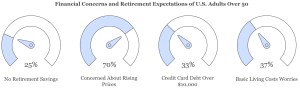
With an ageing population, fewer working-age adults, shrinking fiscal resources, and eroding public services, the U.S. is at a tipping point. If bold reforms are not enacted, such as shifting priorities toward prevention and smarter fiscal policy, the gap between investment and outcomes will continue to widen. The concerns of America’s ageing population are real, as visualised in the chart below.
How to move from Paradox to Perfection?
Policy makers, healthcare leaders, and innovators must focus on turning technological possibilities into widespread benefits. AgeTech Leadership Labs advises proactive policies, systemic reforms, and fiscal discipline. Key among them includes:
1. Focus on the “AAA” standard for healthspan: The policy framework should ensure
-
Affordable: Ensure Innovation in treatments doesn’t remain a luxury for the wealthy.
-
Available: Expand access across geographies and demographics.
-
Accessible: Remove barriers so older adults can truly benefit from innovation.
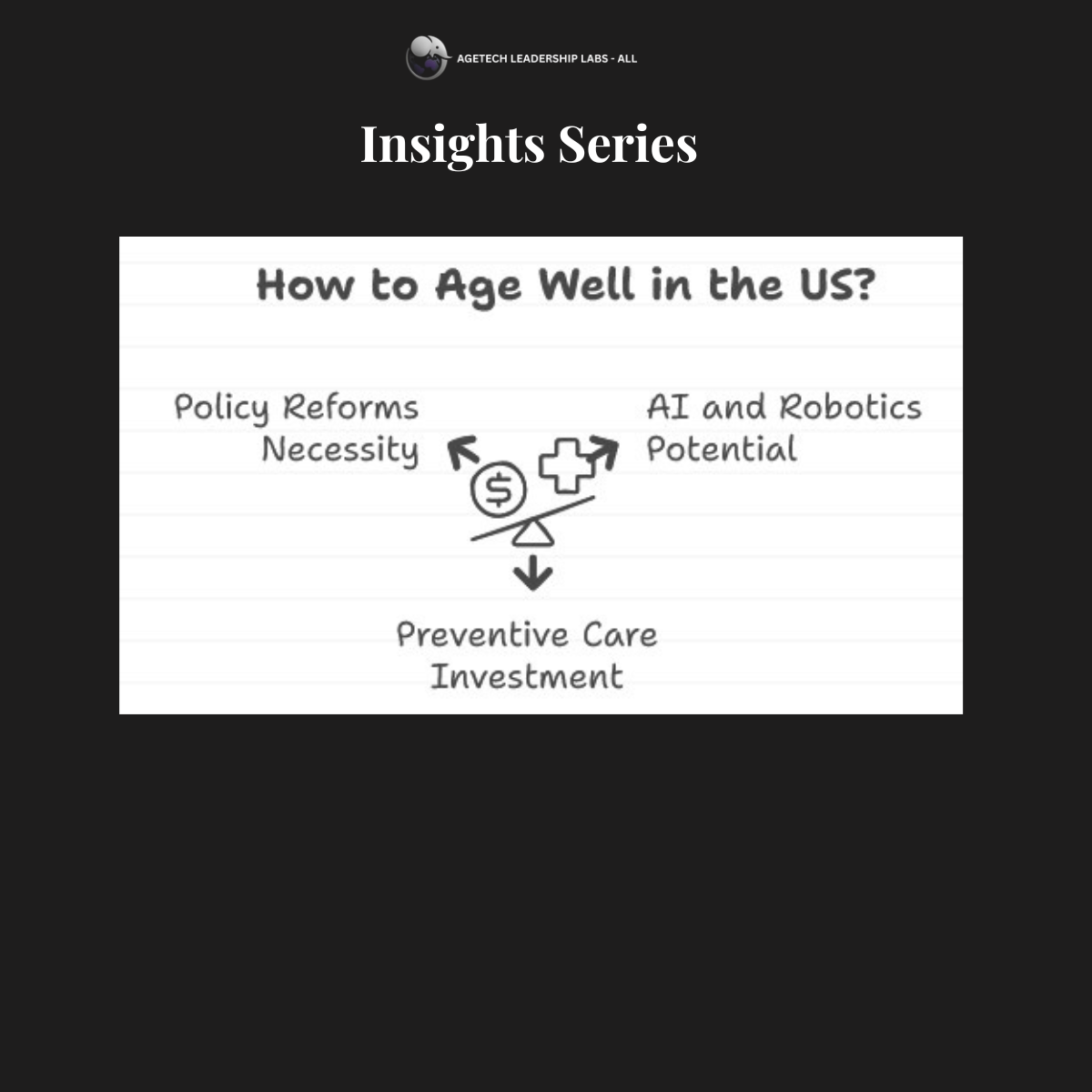
2. Focus on Prevention: At a systemic level, a fundamental rebalancing toward prevention, not just treatment, is critical. Even with substantial spending, the U.S. system continues to favour late-stage medical intervention over wellness and disease prevention. Prioritising prevention could dramatically lower long-term costs and improve health outcomes.
3. Technology as Lifeline: Technology offers promise, but must be paired with policy and prevention to deliver real results. AI and robotics provide real hope for the $4 trillion healthcare sector:
-
As futurist Ray Kurzweil suggested, AI can streamline care delivery, enhance diagnostics, and reduce administrative overhead.
-
Robotics, spearheaded by leaders like Elon Musk, offer the potential for personalised, affordable care companions – especially important for underserved communities.
The Moment for Decisive Leadership: The stakes could not be higher: The future of healthcare will profoundly shape America’s competitiveness, well-being, and social fabric. To avoid deepening the paradox, the U.S. must ensure health benefits and innovation are genuinely Affordable, Available, and Accessible for all.
Will America rise to the challenge, or continue down an unsustainable path? The time for action is now.
Follow AgeTech Leadership Labs page to get insights on the development of the global Longevity Economy Framework and Longevity Inflation Index
#LongevityInflation #HealthyAging #ChartOfTheCentury #HealthcareInnovation #AgingWell #PreventionFirst #LongevityEconomy