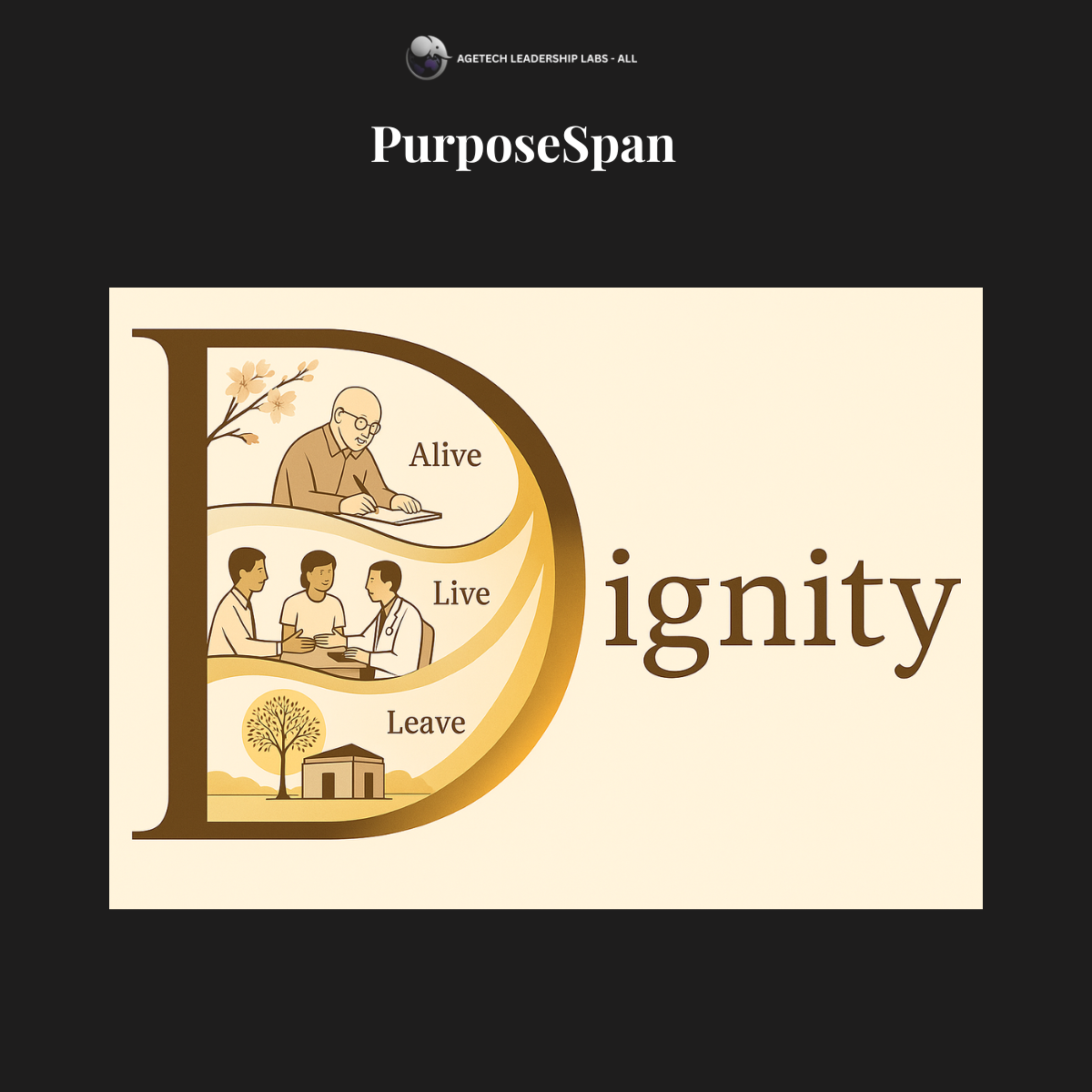
We plan carefully for how to be Alive and how to live with dignity. We spend decades building careers, nurturing relationships, and shaping legacies. But when it comes to how we leave? We often pretend it will never happen, Longevity Economy Paradox!
The Missing Dignity:
This silence reflects a blind spot in the Longevity conversation. Too often, longevity is framed through a narrow lens: living longer, healthier, wealthier, or even with purpose. But true longevity is not complete unless it also embraces how we depart.
At AgeTech Leadership Labs, we call this vision ALL-D: Alive, Live, and Leave with Dignity. Yet when it comes to the last part : leaving with dignity, most societies fall short. Until we address this blind spot, the longevity story remains unfinished.
And here, Asia has lessons to offer. Japan, Singapore, and India each, in their own way, are beginning to confront this missing piece.
The Japanese Breakthrough: When Conservative Society Leads Change
In the early 2000s, Japan began grappling with what scholars called tashishakai—a “society of many deaths” as its population aged rapidly. Nearly one in three citizens is now over 65. In such a context, avoiding the subject of mortality was no longer possible.
Out of this emerged Shukatsu, or “end-of-life preparation.” The word itself is a clever play: young people use “shūkatsu” to mean job-hunting, but older generations changed the character for shu to mean preparing for “the end.” What began as individual anxiety quietly grew into collective empowerment. The most common reason cited for Shukatsu? Not wanting to inconvenience family members.
This was not just about wills or funeral arrangements. In a society where single-person households and couple-only homes were multiplying, Shukatsu became a cultural recalibration. Mortality was no longer treated as a shameful secret but accepted as part of life’s natural rhythm. Shukatsu fairs became community events, with workshops and services to help people prepare not only logistics but also legacy and emotional closure.
The Japanese experience shows that even in societies steeped in ritual formality, change is possible when inevitability is confronted with openness and dignity.
Government as Catalyst: The Singapore Model
While Japan’s Shukatsu reflects cultural readiness, Singapore represents institutional readiness. Its Advance Care Planning (ACP) initiative gives citizens a framework to articulate their healthcare, spiritual, and personal preferences long before they are needed.
By institutionalizing these conversations as part of public health, Singapore shifted death preparation from a private family burden to a collective responsibility. Families are invited to have these discussions early, reducing conflict and anxiety when critical moments arrive.
The genius of ACP lies in reframing. Death preparation is not presented as morbid, but as empowering like financial planning or preventive healthcare. By embedding it into national systems, Singapore normalized what once was taboo.
India’s Path: Infrastructural Readiness
While Japan and Singapore approached readiness through planning and dialogue, India is beginning its journey through infrastructure by reimagining the very spaces where farewells take place.
India’s rituals are elaborate, but preparation is largely absent. Across the country, cremation grounds are often poorly maintained, unhygienic, and mismanaged—leaving families to grieve in environments of neglect and chaos. This is the very definition of leaving without dignity.
This is where Suresh Chukkapalli, Chairman Emeritus of Phoenix Group, has taken a bold step. Phoenix is one of India’s leading infrastructure and construction conglomerates. Having stepped back from active business leadership, Suresh now devotes his time to philanthropy and diplomacy, serving as Korea’s Honorary Consul General in Hyderabad and working to strengthen the India–Korea relationship.
 To honor his father’s memory, he launched Mahaprasthanam, a state-of-the-art crematorium. Despite being advised not to pursue it given the deep cultural taboos around death he persisted, convinced that dignity at the time of leaving was non-negotiable.
Mahaprasthanam is not merely a facility; it is a sanctuary of dignity. With modern infrastructure, transparent systems, and serene design, it transforms what is too often a traumatic experience into a meaningful farewell. Over time, Mahaprasthanam has expanded into multiple crematoria across three states in India, proving that courage and conviction can inspire replication even in the most culturally resistant spaces.
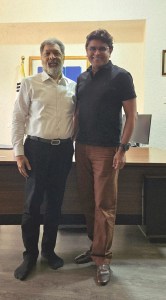
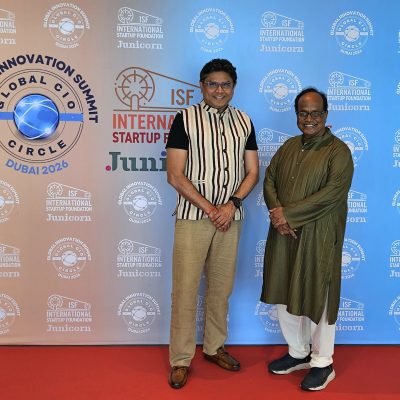
It was an honor for me to meet Suresh Chukkapalli and learn about this initiative, all the more so because it has its roots in my hometown of Hyderabad. When he told me, “I was advised not to do this. But I felt strongly that if life is about dignity, then leaving must be too,” it struck me as the perfect embodiment of the AgeTech Leadership Labs – ALL-D vision.
Beyond Rituals: Learning from ASEAN
The importance of infrastructure is reinforced across ASEAN, where funeral parlors have become the cultural norm. From Singapore to Thailand, families expect dignified, well-managed spaces for mourning. These institutions coexist with tradition, demonstrating that cultural rituals and modern facilities are not at odds they strengthen each other.
India must walk the same path. Mahaprasthanam shows what is possible, but the rest of the country must rise to the challenge. A civilisation that reveres life and honors death cannot allow its last mile of dignity to be left to chance.
Completing the Circle: The Four Dimensions of Readiness
Taken together, these stories illustrate three distinct but complementary pathways:
- Japan shows how culture can evolve through dialogue and preparation.
- Singapore shows how institutions can normalise readiness.
- India shows how infrastructure can restore dignity to the spaces of departure.
Together, they highlight the beginnings of what we might call the four dimensions of readiness:
- Spaces – the physical environments where farewells take place.
- Systems – the cultural and institutional frameworks that make preparation normal.
- Security – the financial clarity of wills, inheritance, and legacies that prevent conflict.
- Spirit – the emotional and spiritual closure that allows families to heal.
Japan and Singapore have begun to advance Systems. India, through pioneers like Suresh Chilkauri, has started reimagining Spaces. But for the circle to be truly complete, we must also confront the questions of Security and Spirit.
The Call Forward
Cremation and funeral infrastructure are only one part of the picture. If we are serious about ensuring dignity in departure, we must address all four dimensions of readiness: Spaces, Systems, Security, and Spirit.
These are not morbid preoccupations. They are acts of love, clarity, and compassion.
Ps: This article begins with the story of Mahaprasthanam in my hometown of Hyderabad. In the posts that follow, I will explore how each of these four dimensions can help us complete the circle of ALL-D: Alive, Live, and Leave with Dignity, and how societies across Asia can build a culture where leaving is as dignified as living.