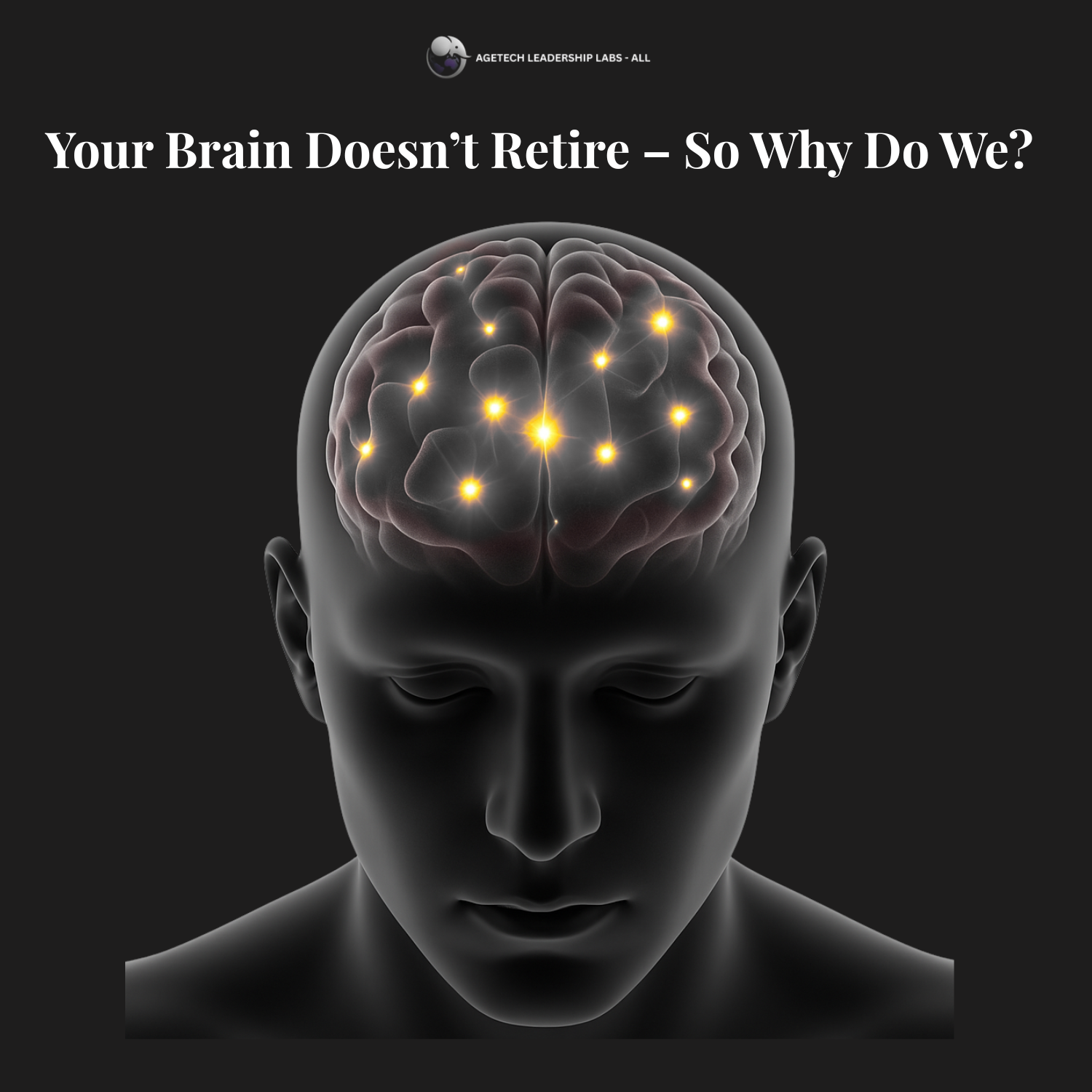
A new study from Karolinska Institutet shows that the brain continues to generate neurons well into old age. The science is clear: growth continues. The challenge is cultural. Will our mindset about ageing catch up?
Most of us were told that once we reach adulthood, our brains stop growing. But groundbreaking research from Karolinska Institutet, led by Professor Jonas Frisén and published in Science in 2025, has just proved otherwise: even into our seventies, the brain keeps generating fresh neurons in the hippocampus, the part of the brain responsible for memory and learning.
That changes everything. Biology says growth continues. Culture still says you’re too old. And until we close that gap, no app, no program, no policy will truly work.
This is why mindset must come before solutions.
Why Mindset Must Come First
We often rush to introduce solutions—apps, wellness programs, policy reforms, and financial tools — without first addressing the way ageing is perceived. Adoption stalls. People resist, not because the solutions are flawed, but because they don’t see themselves as worthy or capable of benefiting from them.
If someone believes “I’m too old to learn tech,” no digital literacy program will stick. If someone thinks “I’m already declining,” they won’t invest in fitness or brain training, even though neurogenesis proves growth is still possible. If society assumes “the old are a burden,” businesses and policymakers won’t prioritise longevity solutions at all.
Mindset is the soil. Solutions are the seeds. Without preparing the soil, the best seeds cannot grow.
The Sequence That Works
The right sequence begins with narrative. Ageing is not expiring, it is evolving. Then comes identity: people must see themselves as active learners, contributors, and innovators at every age. Only then do solutions flourish. Once people believe, they are far more likely to adopt new technologies, join programs, or embrace policies.
This is why cultural shifts, role models, and campaigns are as critical as scientific breakthroughs. Without them, even the most brilliant innovations risk becoming innovation wastelands, tools designed but unused, funds allocated but underleveraged, and a generation sidelined despite biological potential.
The takeaway is simple: decline is not inevitable. Growth is possible. But only if we believe it.
Gen E: Generation Encore
At AgeTech Leadership Labs, we’ve given this reality a name: Gen E – Generation Encore. This is the world’s largest and most overlooked generation: people in their fifties, sixties, seventies, and beyond. They are not winding down. They are stepping into their encore stage. Their stories, their biology, and their potential converge on the same truth: they are not outdated. They are still growing. However, society must first change the script so that solutions can take root in fertile ground.
The Future We Choose
We are at a crossroads. If we treat ageing as a liability, it becomes a burden to be managed. If we see it as an asset, it becomes a resource to be unlocked. The science of neurogenesis doesn’t just tell us that neurons keep growing; it proves our conviction right.
At AgeTech Leadership Labs, our vision is clear: ageing is an asset. The future of the longevity economy will not be defined by decline, but by encore. It will belong to Gen E, a generation evolving, not expiring.
And it begins with the boldest solution of all, changing our mindset.
#AgeingIsAnAsset #LongevityEconomy #Neurogenesis #GenE #GenerationEncore #Neuroplasticity #HealthyAgeing #EncoreStage #MindsetShift