Climate Week in New York has become the world’s annual stage for debating the planet’s future. Leaders, CEOs, and activists gather to discuss carbon, renewables, and sustainability commitments. Yet one critical issue is missing from the agenda: longevity.
From Compounding Wealth to Compounding Life
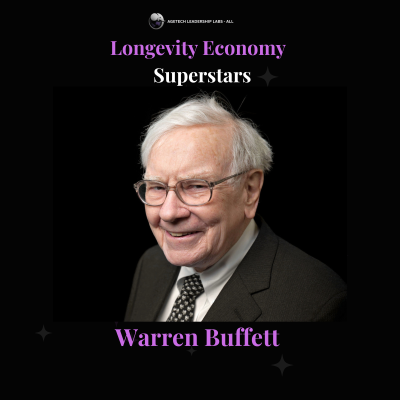
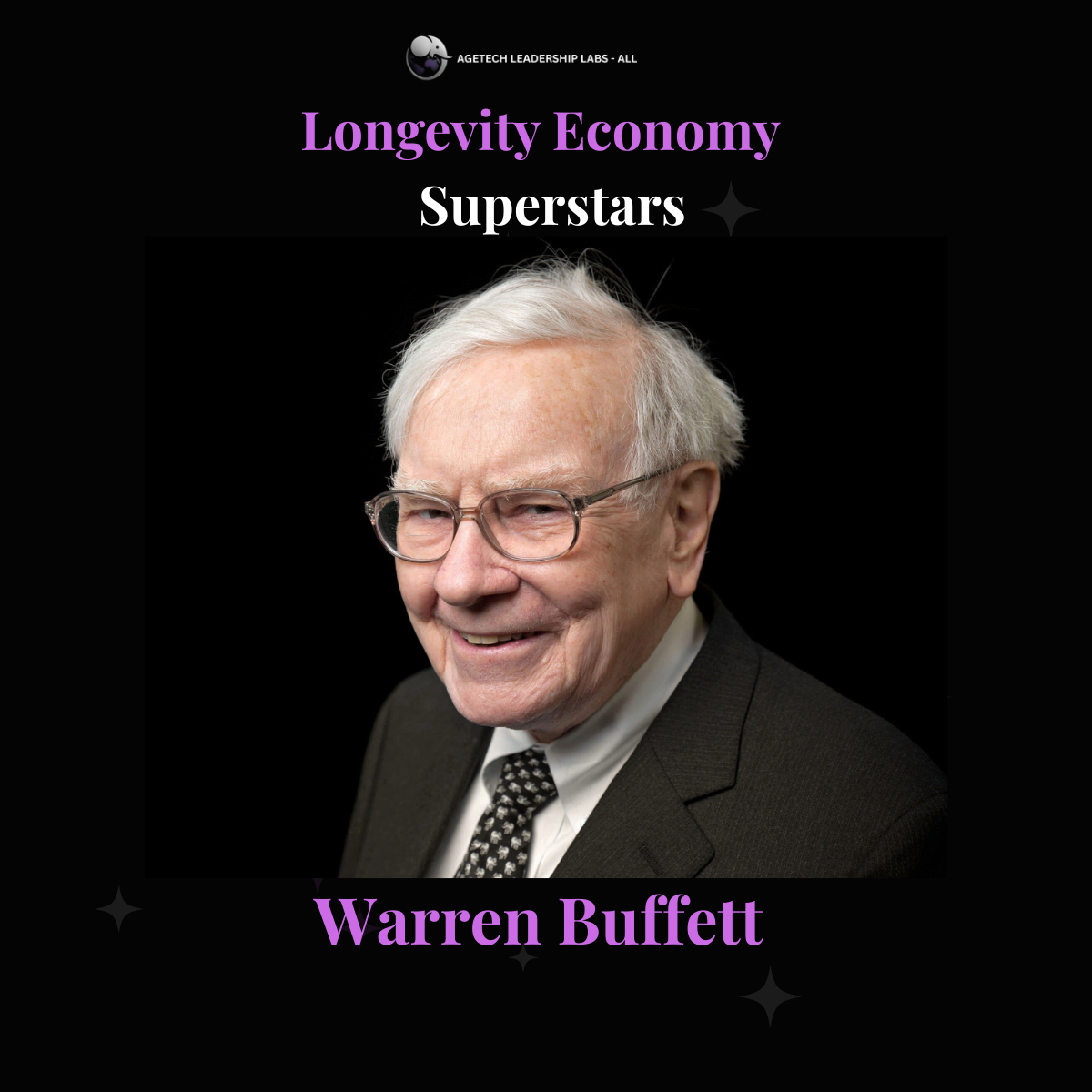
Warren Buffett once called compounding the 8th wonder of the world. He likened it to a snowball rolling down a hill – what begins small gathers momentum and mass until it becomes unstoppable. Harvard professor Dr. David Sinclair shows us that compounding applies not just to money, but to life itself. In his book Lifespan, he writes:
“For every day you live, you are buying time for science to catch up. Forty years from now, it could be another two weeks. Eighty years from now, another three.”
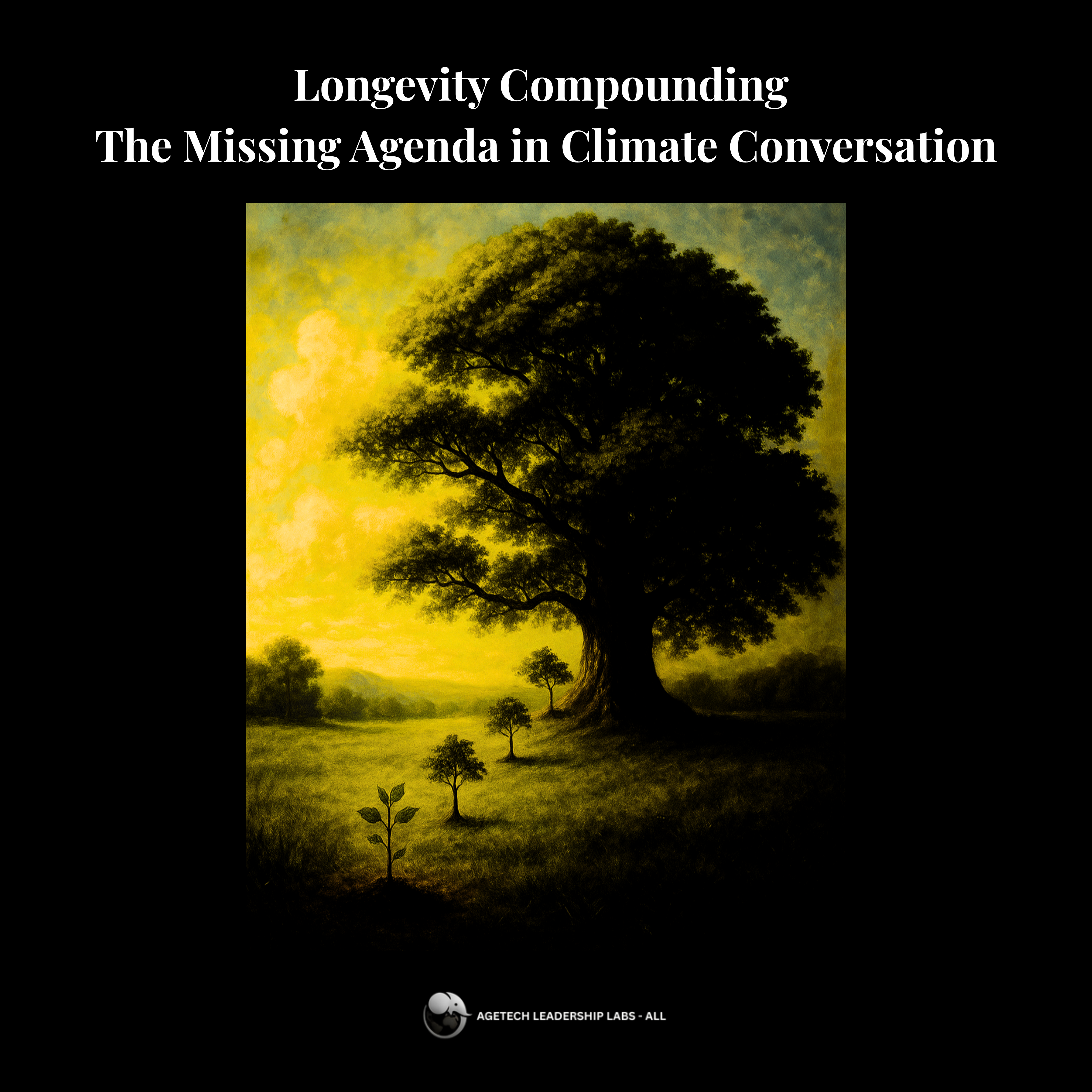
This accelerating effect is what we at AgeTech Leadership Labs call Longevity Compounding , the idea that each day lived in good health doesn’t just add time, it multiplies it. By staying alive and well today, we earn the right to benefit from tomorrow’s breakthroughs — from AI-led drug discovery to regenerative medicine which then extend our lives even further. Time itself begins to compound.
Why Longevity Matters to Climate
But here’s the danger: longevity without sustainability amplifies the very crisis Climate Week is meant to solve. As Sinclair warns:
“The problem is not population, but its consumption. And it’s not consumption alone, it’s waste.”
The data makes the challenge clear:
– If everyone consumed like the average American, it would take four Earth-years to regenerate the resources used in just one (Global Footprint Network).
– The U.S. wastes 133 billion pounds of food annually — about 40% of its total supply (USDA).
– Global municipal solid waste has already reached 2.1 billion tons a year, and is projected to rise to 3.4 billion tons by 2050 (World Bank). Only 16% is currently recycled.
– The average American produces 4.4 pounds of trash daily, more than double the global average (EPA).
Now imagine extending lifespans by 20, 30, or 40 years under these conditions. Longevity becomes not just a medical triumph but a climate multiplier — magnifying the pressure on ecosystems already stretched to their limits.
SHIP and SAIL: A Dual Discipline
At AgeTech Leadership Labs, we believe compounding must be managed through a dual discipline:
- SHIP — Systematic Healthy Investment Plan.
Just as SIPs (Systematic Investment Plans) grow financial wealth, SHIPs grow time wealth. Each healthy meal, walk, or preventive check-up is a deposit into our biological future. - SAIL — Systematic Action for Individual Lifestyle.
For planetary health, we need the same discipline. Each choice — reducing waste, consuming less, reusing more — is a deposit into Earth’s longevity account.
Together, SHIP and SAIL ensure that longevity compounding becomes a dividend for humanity — not a burden for future generations.
The Blindspots of Compounded Longevity
The conversation about longevity is often framed as purely medical. But ignoring its ripple effects risks creating blindspots:
- Climate: Extended lives mean extended consumption unless paired with sustainability.
- Wealth: The UN projects 3.1 billion people over 60 by 2100. Retirement and savings systems built for shorter lives will buckle without reform.
- Purpose: Viktor Frankl once wrote: “Those who have a ‘why’ to live, can bear with almost any ‘how.’” More years without meaning risks turning abundance into emptiness.
A Call to Action
Buffett’s snowball explains the force of compounding in wealth. Sinclair shows us its power in life. At AgeTech Leadership Labs, we call this Longevity Compounding. But unless we pair longevity with sustainability, the snowball of compounding years may crash into the very systems Climate Week is trying to protect. Longevity is not a side issue. It is the missing agenda at Climate Week.
Because just as we don’t wait for institutions to manage our health, we cannot wait for them to save the Earth. Institutions make commitments. Individuals must make changes. Longevity compounding could be humanity’s greatest dividend — or our greatest burden. The choice is whether we sail both ships: SHIP for our health, SAIL for our plan