What would you do with 20 extra good years?
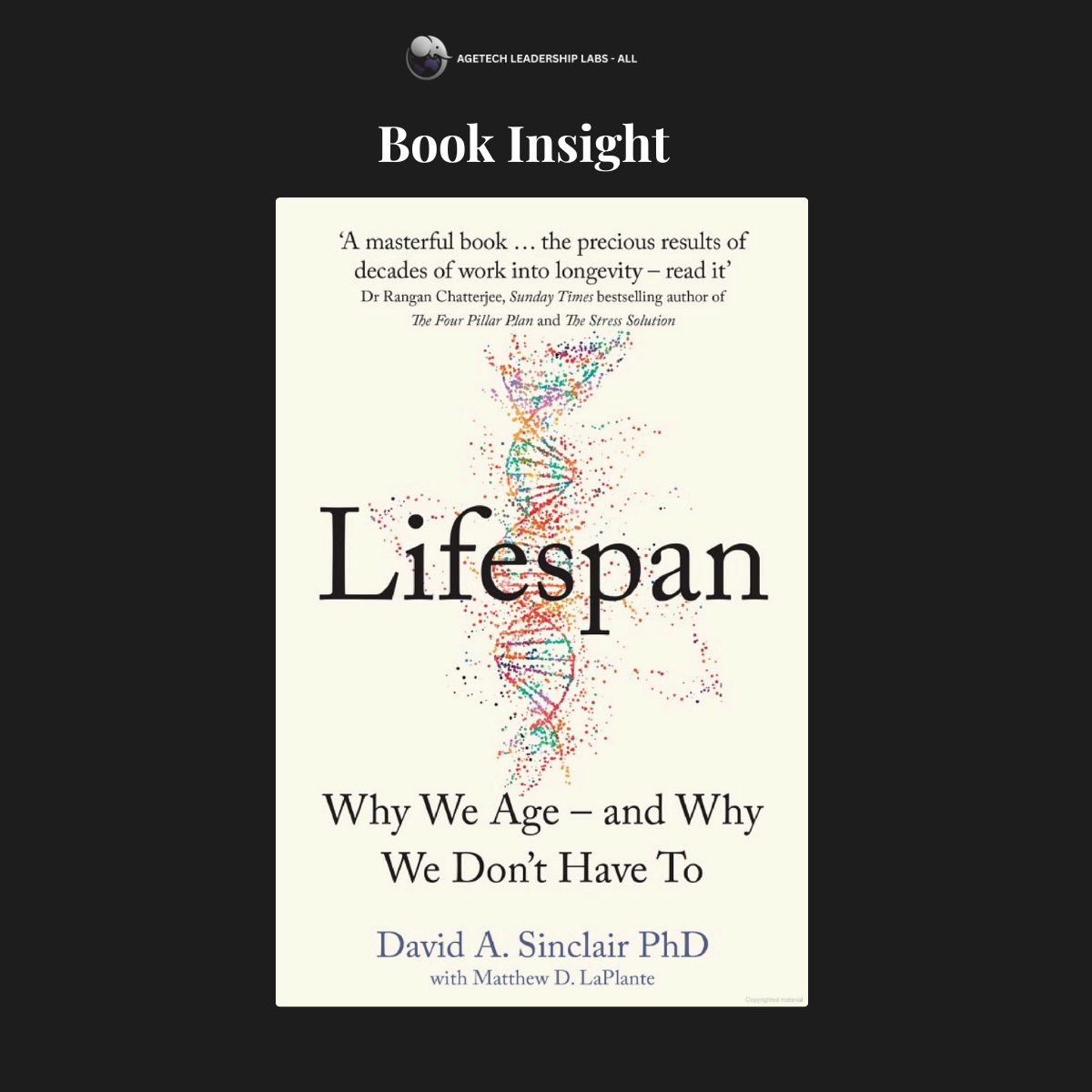
Every so often, a book doesn’t just inform it reshapes how we imagine the future. For me, Lifespan why we age – and why we don’t have to is one of those rare works. It profoundly influenced how I see longevity—and how that vision now guides my journey to build the 8th Continent, the home of Gen E.
David Sinclair, a Harvard scientist, has spent decades exploring not only why we age, but how we might slow, halt, or even reverse it. Yet the most powerful idea in Lifespan isn’t found in the lab; it’s on the back cover:
“What would you do with 20 extra good years?”
It’s not a question about science.
It’s a question about purpose.
This is where AgeTech Leadership Labs’ idea of Longevity Compounding comes in: every healthy choice today multiplies your capacity to benefit from tomorrow’s breakthroughs. As Sinclair notes, “The benefits of good choices don’t just add up over the years; they multiply just like compounding interest in finance.
Rethinking Aging – Destiny or Decision?
For centuries, aging was seen as destiny, an unquestioned decline. Sinclair challenges that head-on: “I believe that aging is a disease. I believe it is treatable. I believe we can treat it within our lifetimes.” Only about 20 percent of longevity, he observes, is genetic; the rest is down to daily choices. Aging, Sinclair maintains, is the “mother of all diseases” not just an outcome, but a root cause behind conditions like cancer, heart disease, and Alzheimer’s.
He frames aging as the loss of crucial biological “information” our cells gradually forget how to function, but through consistent habits, movement, nutrition, rest, and resilience we can “activate survival circuits” and extend both our lifespan and healthspan. Each daily choice accrues not just in physical outcomes, but in compounding momentum for a longer, more vital life.
Beyond Science: Purpose as the Anchor
Sinclair’s science circles back to something deeply human: purpose. From Okinawa to Sardinia, those who feel useful, connected, and curious not only live longer but also better.
Sinclair warns: “There are few sins so egregious as extending life without health.”
Modern longevity is only as good as the meaning infused into those years. Longevity isn’t just about extra years. It’s about extra life in those years.
The Other Side of Compounding
But compounding, left unchecked, can turn negative. At AgeTech Leadership Labs, (ALL) we highlight the Retirement Gap the gap between our extending lifespans and how long our financial resources or social systems are structured to support us.
If Longevity Compounding rewards those who start early, negative compounding punishes delay. Unattended, the cost of inaction whether it’s health decline, inflation, or loneliness grows every year.
This gap between living longer and living better is the silent crisis at the heart of the longevity revolution.
ALL Reflection : The Four Spans Framework
At ALL, we translate Lifespan’s insights into a holistic lens: Lifespan, Healthspan, Wealthspan, and Purposespan. True longevity begins when these four move together:
- Lifespan is time but on its own, just duration.
- Healthspan is freedom, the energy to live independently and fully.
- Wealthspan is the enabler resource for learning, connecting, and contributing.
- Purposespan is the source of meaning, the span that gives all others shape.
When these align, Longevity Compounding works for us. When they don’t, negative compounding sets in—aging accelerates, savings deplete, and purpose fades.That’s why ALL is working to help people, businesses, and policymakers redesign systems—so that health, wealth, and purpose truly reinforce one another across decades.
The Real Question
In the end, Lifespan isn’t just about aging it’s a manifesto for agency. “Our DNA is not our destiny.”
Science may add years to our lives, but purpose and alignment will decide what we do with them. If you had 20 extra good years how would you compound them?